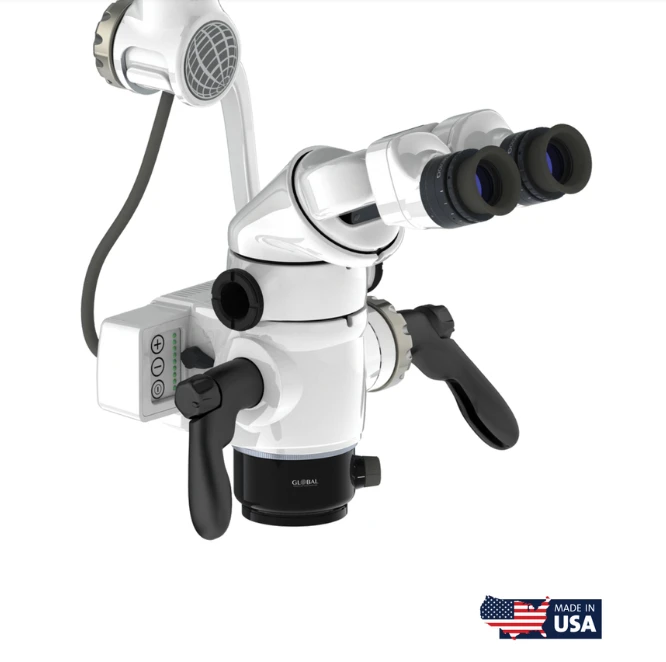
Microscope-assisted endodontics

Root Canal Treatment

Root canal treatment treats inflamed or infected dental pulp and often allows the natural tooth to be saved. We use a Global dental microscope and rubber dam isolation for better visibility, a clean working field, and more precise canal cleaning.

  • Global dental microscope
  • Rubber dam isolation
  • Treatment of infected pulp
  • Preservation of the natural tooth
Root Canal Treatment

When root canal treatment is needed

Root canal treatment may be necessary after deep decay, trauma, inflammation, or infection inside the tooth. Symptoms can include pain, sensitivity, swelling, or discoloration, although some problems are found during an examination.

Why we work with a microscope

The microscope magnifies tooth structures and helps detect narrow, curved, or additional canals. This is especially important in complex cases, retreatment, and teeth with challenging anatomy.

The role of the rubber dam

A rubber dam isolates the tooth from saliva. It creates a dry and cleaner working environment, reduces contamination risk, and improves comfort and safety during treatment.

What to expect

During treatment, infected or damaged pulp is removed, the canals are cleaned and disinfected, and then sealed with a special material. In some cases, a crown is recommended to protect the tooth.

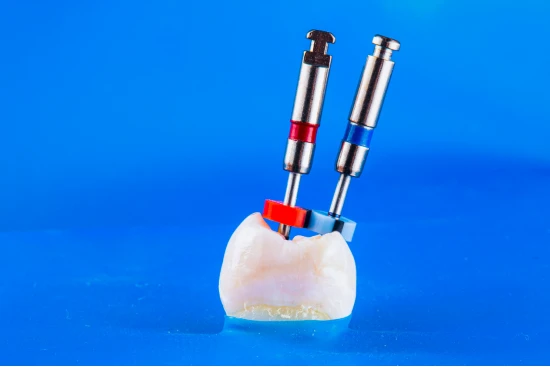
More visibility and control inside the root canals.

Global dental microscope

More visibility and control inside the root canals.

At DentaFace, we use a Global dental microscope for endodontic treatment. Magnification and strong illumination help us see details that can remain hidden to the naked eye, particularly in complex anatomy or retreatment.

  • Detection of narrow, curved, or additional canals
  • More precise cleaning and disinfection of the canal system
  • Lower risk of missed areas and incomplete filling
  • Better assessment of cracks, old fillings, and complex cases
  • Clearer explanation of the problem through real visualization

Frequently asked questions

What patients usually ask.

Does root canal treatment hurt?

In most cases it is performed with local anesthesia and the goal is maximum comfort. If the tooth is strongly inflamed, we discuss possible sensitivity in advance.

Can a previously treated tooth be saved?

Often retreatment is possible, but it depends on the condition of the roots, the old filling, and the remaining tooth structure.

Why is a crown sometimes needed afterwards?

When a tooth is badly damaged or weakened, a crown protects it from fracture and helps restore normal chewing function.

How does the microscope help the patient?

Better visibility supports more accurate cleaning, diagnosis, and explanation of the problem, especially in complex canals or retreatment.

Consultation

Let us see which approach is right for your case.

The best treatment starts with diagnosis and conversation. You will receive a clear explanation of options, limitations, timing, and next steps.